
.png)

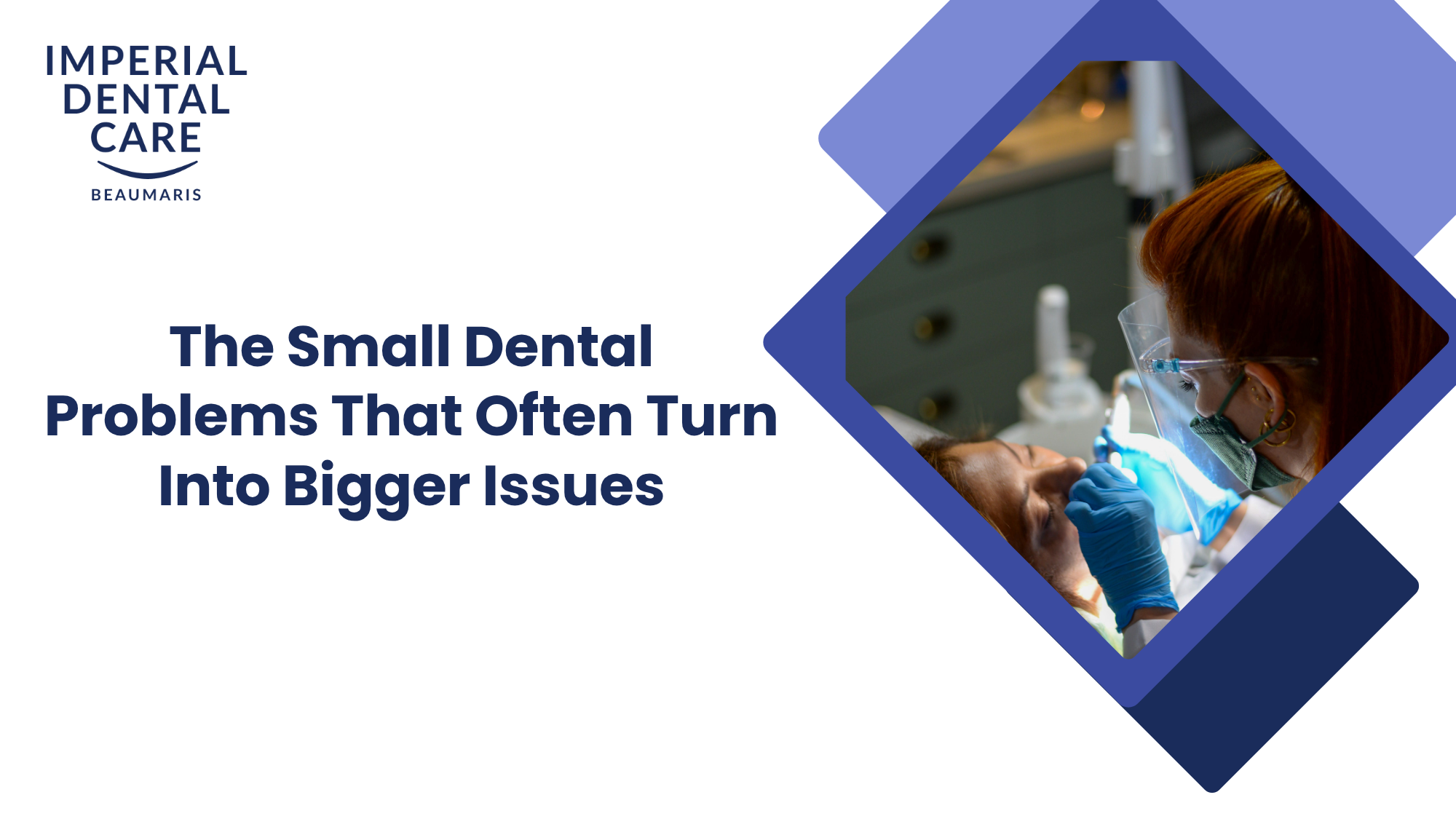
The Small Dental Problems That Often Turn Into Bigger Issues
It starts with something minor - a tooth that feels a little sensitive when you drink cold water, or a small chip you have barely noticed. Life gets busy, it does not seem urgent, and before long months have passed without a dental visit. This is one of the most common patterns a Beaumaris dentist sees - patients who waited on a small issue that quietly grew into something far more serious.
This article covers the most common minor dental problems that tend to escalate when left unaddressed, what to look out for, and why getting on top of them early makes a significant difference to your long-term oral health.
Why Small Problems Rarely Stay Small
Your mouth is a complex, interconnected environment. Teeth, gums, bone, nerves, and surrounding tissue all work together. When one element is compromised - even slightly - it can create a ripple effect that impacts other structures over time.
Dental problems rarely announce themselves dramatically at first. Most begin as minor irritations or barely visible changes. Without treatment, decay spreads, infections develop, and bone loss begins. What could have been resolved in one appointment becomes a multi-stage treatment plan.
Regular check-ups at your Beaumaris dental clinic exist precisely to catch these problems before they escalate - often before you have any symptoms at all.
Common Small Dental Problems That Escalate
1. Tooth Sensitivity
A brief, sharp zing when you bite into ice cream or sip a hot coffee is easy to brush off. Most people assume it is just something teeth do. In reality, sensitivity is a signal that enamel has worn down, a tooth has a small crack, early decay has set in, or gum recession has exposed root surfaces.
If the underlying cause is not identified and managed, the damage to the tooth structure continues. Enamel does not regenerate. What starts as occasional sensitivity can progress to persistent pain, nerve damage, and eventually the need for root canal treatment or extraction.
A dentist can pinpoint the source of sensitivity and recommend the appropriate intervention - whether that is a fluoride treatment, a filling, a crown, or monitoring for further changes.
2. A Chipped or Cracked Tooth
Minor chips often feel cosmetic. If the tooth does not hurt, it can seem like a low priority. However, chips and cracks expose the inner dentine layer, which is far softer than the outer enamel. Bacteria enter through even hairline cracks, decay accelerates, and the structural integrity of the tooth weakens.
A crack that is treated early with bonding or a crown remains a manageable fix. A crack that extends into the root or allows an infection to develop may result in tooth loss - a significantly more involved outcome that requires replacement with an implant, bridge, or denture.
If you have chipped or cracked a tooth, even without pain, a visit to your Beaumaris dental practice is worth prioritising.
3. Bleeding Gums
Gums that bleed when brushing are so common that many people assume it is normal. It is not. Bleeding gums are typically the first sign of gingivitis - the earliest, reversible stage of gum disease. At this stage, a thorough professional clean and improved home care is generally all that is needed to restore gum health.
Left untreated, gingivitis progresses to periodontitis - a more serious infection that affects the bone and connective tissue supporting your teeth. Periodontitis cannot be fully reversed. It requires ongoing management and is one of the leading causes of adult tooth loss in Australia.
The good news is that catching it early means a straightforward path back to healthy gums. Do not ignore bleeding gums - they are your mouth telling you something is off.
4. A Small Cavity
Early decay - the type that shows up on an X-ray before you feel anything - is one of the most treatable dental problems. A small filling restores the tooth and stops the decay in its tracks.
Cavities do not heal on their own. Without intervention, decay deepens through the enamel and into the dentine. If it reaches the pulp - the nerve and blood vessel tissue at the centre of the tooth - pain can become severe and a root canal treatment may be necessary. In advanced cases, the tooth may be unsalvageable.
This is one of the clearest illustrations of why regular dental check-ups pay off. A cavity caught at your six-monthly appointment at our general dentistry clinic is a vastly simpler fix than one discovered after it has spread.
5. Teeth Grinding (Bruxism)
Many people grind their teeth at night without realising it. A partner might mention it, or you might notice a dull jaw ache in the morning. Early signs include worn tooth surfaces and increased sensitivity. These symptoms are easy to dismiss, but grinding places considerable stress on teeth, the jaw joint, and surrounding muscles.
Over time, bruxism can cause significant enamel loss, cracked teeth, TMJ (temporomandibular joint) disorders, and headaches. Teeth that are heavily worn may eventually need crowns or veneers to restore their function and appearance.
A custom-fitted night guard is a simple and cost-effective way to protect your teeth. Identifying and managing bruxism early avoids far more complex treatment later.
6. A Loose or Lost Filling
Fillings do not last forever. Over years of chewing, they can loosen, crack, or fall out entirely. When a filling fails, the tooth underneath is exposed and vulnerable to bacteria. Decay can form quickly in and around the space left behind.
A lost filling is not always painful straight away, so some patients put off getting it seen to. But the longer the tooth is left unprotected, the greater the risk of decay progressing to the point where a larger restoration - or root canal treatment - is needed.
If a filling has come loose or fallen out, book an appointment promptly. Replacing it is a simple procedure when caught early.
7. Bad Breath That Does Not Go Away
Persistent bad breath - the kind that does not improve with brushing and mouthwash - is often a symptom rather than a problem in itself. It can indicate gum disease, tooth decay, a dental abscess, or bacteria trapped under a crown or around an old restoration.
Masking it with mints or mouth rinse does not address the source. A dental assessment can identify what is causing it and resolve the underlying issue before it worsens.
8. A Dental Abscess in Its Early Stages
An abscess is a pocket of infection at the root of a tooth or in the surrounding gum tissue. Early-stage abscesses may cause mild discomfort, a small lump on the gum, or temperature sensitivity. Some people notice it briefly and then find the pain settles - mistakenly thinking the problem has resolved.
Dental infections do not resolve without treatment. They can spread to surrounding teeth, the jawbone, and in serious cases, to the neck and beyond. A dental abscess that is caught early can often be treated with drainage and antibiotics, or a root canal procedure. Delayed treatment can lead to tooth loss or require hospitalisation.
If you experience any unusual swelling, pain, or sensitivity that comes and goes, it is worth having it assessed without delay.
What These Problems Have in Common
Every issue listed above shares a few key characteristics:
- They are easy to dismiss in the early stages because symptoms are mild or absent.
- They are straightforward to treat when caught early.
- They become significantly more complex - and more costly - when left unaddressed.
- They can nearly always be detected at a routine check-up before symptoms develop.
The pattern is consistent: early intervention saves teeth, reduces discomfort, and avoids the need for more invasive treatment.
The Role of Regular Dental Check-Ups
Six-monthly dental check-ups are recommended not as a formality but as a practical tool for catching problems at their most manageable stage. At each appointment, your dentist examines your teeth and gums visually and with X-rays, screens for early decay, checks existing restorations, and monitors changes from one visit to the next.
Patients who attend regularly are far less likely to need complex or expensive treatment, because problems are identified and addressed before they escalate.
If you have been putting off a check-up, now is a sensible time to book one - particularly if you have noticed any of the warning signs covered in this article.
Why Patients in Beaumaris and Bayside Delay Dental Care
Dental avoidance is extremely common, and the reasons are understandable. Dental anxiety, busy schedules, concerns about cost, and the assumption that no pain means no problem are among the most frequent barriers to seeking care.
It is worth noting that discomfort and anxiety around dental visits are taken seriously at our practice. Treating patients with care and at a comfortable pace is central to how we approach every appointment - particularly for those who have not visited a dentist in some time.
If cost is a concern, addressing a problem early almost always works in your favour financially. A small filling costs far less than a root canal. A professional clean and improved home care costs far less than periodontal therapy.
Searching for a Beaumaris dentist near me? Imperial Dental Care is located at 181 Balcombe Road, Beaumaris, and welcomes patients from across the Bayside area including Mentone, Black Rock, Cheltenham, Sandringham, and Highett.
When to Book Sooner Rather Than Later
While routine appointments are essential, some situations warrant getting seen promptly rather than waiting for a scheduled check-up. Consider booking an earlier appointment if you experience:
- A toothache that persists for more than a day or two
- Swelling in the gum, jaw, or face
- A tooth that has been chipped, cracked, or knocked
- A filling or crown that has come loose or fallen out
- Sensitivity that is noticeably worsening
- Bleeding gums that are not improving with better brushing habits
Our practice provides emergency dental care in Beaumaris for situations that cannot wait. If something feels wrong, do not put it off.
Protecting Your Oral Health Long-Term
Keeping your teeth for life is not complicated, but it does require consistency. A solid foundation includes brushing for two minutes twice daily with fluoride toothpaste, flossing or using interdental brushes every day, staying on top of your check-up schedule, and raising any changes or concerns with your dentist rather than waiting to see if they go away.
Good oral health also supports overall wellbeing. Research continues to highlight links between gum disease and systemic health conditions including cardiovascular disease and diabetes. Looking after your teeth is not just about your smile - it matters to your whole body.
At Imperial Dental Care in Beaumaris, we take a preventive approach to dental care. Our aim is to help our patients maintain their natural teeth in good health for as long as possible - and that starts with catching small problems before they have the chance to grow.
Do Not Let a Small Issue Become a Bigger Problem
The most expensive dental treatment is almost always the one that could have been avoided with earlier action. Whether it is a twinge of sensitivity, bleeding gums, or a filling you know has been loose for a while, getting it assessed sooner means a simpler fix, less discomfort, and more teeth kept intact over the long term.
If you are overdue for a check-up or have noticed something that has not quite felt right, book an appointment at our Beaumaris dental clinic today. We are here to help you stay ahead of problems - not just treat them after they arrive.
Disclaimer: This article has been prepared for general informational purposes only and is not a substitute for professional dental advice, diagnosis, or treatment. Every patient's oral health circumstances are unique. Please consult a qualified dental practitioner for advice specific to your situation.
FAQs
.png)
Conveniently Located Dentist for Bayside Families
We are a trusted dentist in Beaumaris, proudly supporting patients across Bayside Melbourne. Many families visit us from Mentone, Black Rock, Cheltenham, Sandringham, and Highett due to our convenient location and patient-first approach.
Located on Balcombe Road, we offer flexible scheduling and ample parking, making the clinic a convenient choice for ongoing care without long travel times.

Call us
0432 843 835


.svg)